

Reading time: 3.5 minutes
Talking to someone with an accent. We all hear it, but should we ignore it or mention it?
If you’ve been somewhere that considers the way you talk as having an accent (obviously its normal where you’re from), then you’ll have experienced that the first thing almost everyone says is something about your accent.
How do I know this?
I was in a coffee shop and saw someone wearing a hoodie with my – our – uni logo. I went up and said hi, we talked for a while and now we’re the best of friends (based on my analysis). We were having lunch or something and were talking about the first time we met and she mentioned that in her mind, she thought, “he didn’t mention my accent, YESS!!”
I definitely noticed it. I just didn’t think about bringing it up. But of course I was curious, and after talking for a while, I learned that she’s from Joburg (South Africa), not from asking about her accent, but in casual conversation about whatever and anything else.
With a name like Cosmo Socrates, rivaling names as unique as Elon, throughout my childhood I’ve gotten praise and jokes. I’m acclimated to being asked about my name and where it’s from (Greek), most people can’t refrain from vocalizing some observation about it. Seinfeld.
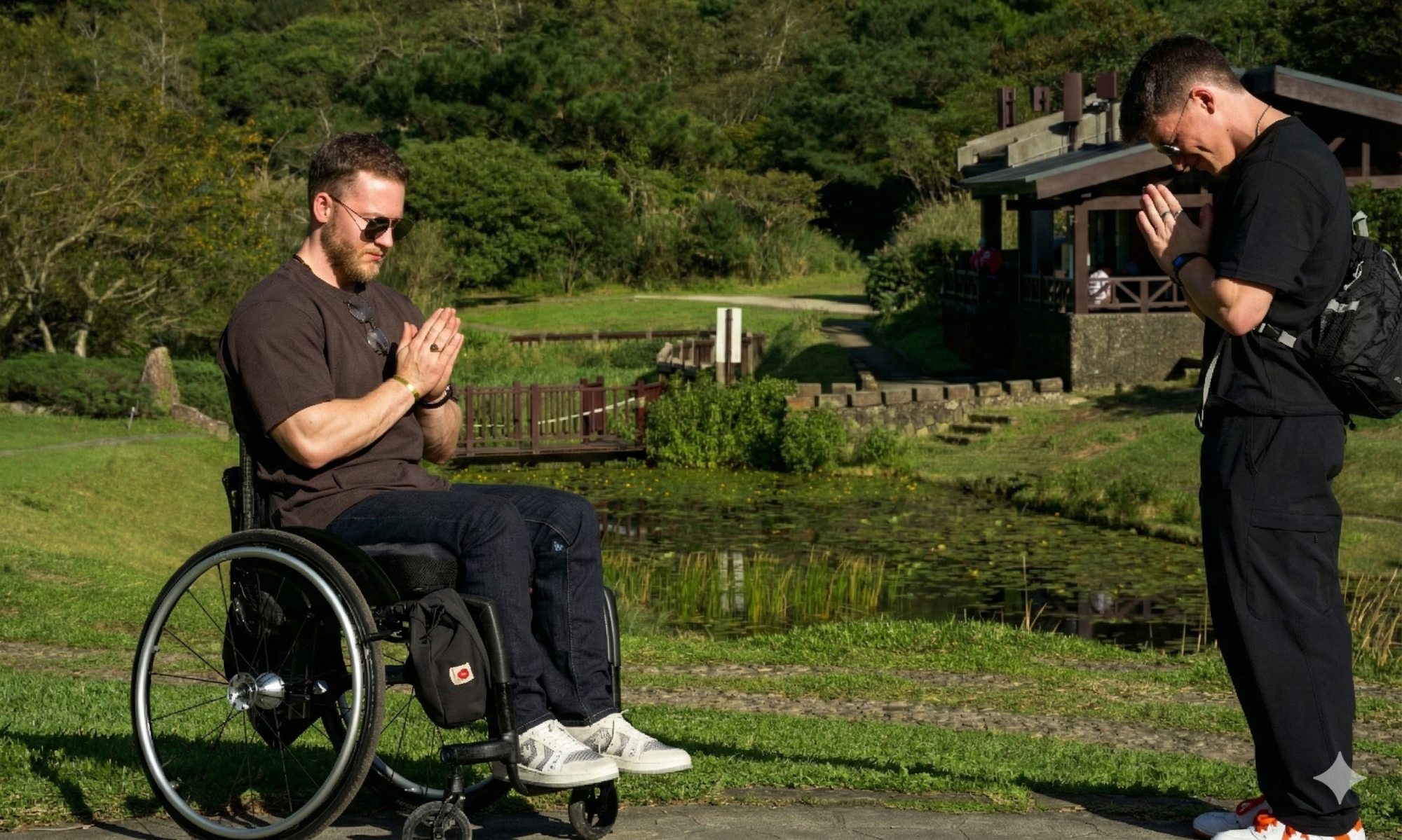
These two seemingly irrelevant examples – accent and names – are all to put in perspective the question of how do you talk to a paraplegic? How to strike a conversation with someone in a wheelchair, properly.
Some people have mentioned that someone once said “so, you don’t look like you need to be in a wheelchair,” and that can invoke some anger (it did), but really, I see it as someone who just doesn’t know what to say, wants to be nice (a failed compliment), and are interested.
In my experience, the best way to begin asking about someone’s injury is always with “If you don’t mind me asking,” and then followed by “how did you get injured?” or something in that discourse locale. Even though I personally never do mind, it’s polite and shows that you understand it could be a sensitive topic – respect.
It may have been a traumatic experience, and by definition, won’t be pleasant to recite and relive every time someone is curious. So that’s where the “if you don’t mind” part becomes important.
The environmental context is probably second only to trauma – that is, is it even appropriate to ask given the longitude latitude?
If I’m in the gym, I probably don’t want to tell you all about how I got injured, the details and my life thereafter, I just wanted you to spot me and then tell me I look good. Similar for being in the store or parking lot and about to get into my car.
I don’t mind the interest, but similar to someone with an accent, it becomes trite, sometimes inconvenient, and irritating to a point – having to explain how I got injured to everyone and their mother. This is one of those arguments of my time isn’t more valuable than yours, but equal and I just don’t want to say this story again.
The story doesn’t always have to be long. I have my one word explanation – “skiing.” Which leaves a lot to the imagination but resolves the curiosity. Likewise, I just say, “Greek.” if someone asks about the name. If you get a one word answer, that’s probably code for, I told you and let’s leave it there.
If you do find yourself post-mortem of saying something that pluck a nerve, you can always save yourself and say, “sorry if that’s rude/the wrong approach, I’m just interested.” People love when other people are interested in them.
Mystery isn’t a dreadful thing either, after all, satisfaction is the death of desire. If the probability of seeing someone again is likely, then leave the story for the second, third, or never time you see them. It will come up in conversation at some point and you’ll be able to focus on the most important exchange – learning about who they are as a person. You might think of it as dialing a wrong number, but not awkwardly. Just talking and learning, you have no face for that voice – no body either.
If you get to know the person first, they may be similar to me and have a website and YouTube where you can read/watch/listen to the story and relieve the mystery itch on your own.
Short answer: The best way to ask or bring up the topic is to just get straight to it. One thing you can be sure of is that it’s not the first or last time they’ll be telling the “what happened” story (results may vary).
Personally, I’ve never has anyone ask me about my injury in a rude way.
For those reading who are in wheelchairs, though there are rude and creepy people, most people who ask about your injury, whether it’s an elegant or off-putting performance, at its core it’s just someone who’s interested in you. It may well be the first time they’ve talked to anyone in a wheelchair or asked someone. Don’t mistake ignorance for belligerence.
There it is. My two cents. A while ago you could get a ride on a horse while your mom checked out at the market. Now, it’ll get you much more. (results may vary)
Immediate actionable items: If you’re in a wheelchair, it’s a good idea to have the short, medium, and long version of your story or a scripted way of saying “no” when asked. If you’re not in a wheelchair, maybe practice with leaving some open loops in your conversation, give mystery a chance.
Summary: When it comes to talking to someone in a wheelchair, there are best practices and considerations. Starting with “if you dont mind me asking,” is always great, being aware of the fact that your curiosity is not more important than the other persons time and it may be best not to ask depending on where you are (in the gym and places like that).
Overdeliver: I can’t think of anything. Usually I leave something out and put it here if it doesn’t fit like clockwork. I suppose it’s also important to know that people in wheelchairs are just people sitting down and you should take some interest in them before their injury, otherwise it’s quite one-sided – your interest and just their trite story.

